
Turn On-Set Color into Confident Creative Decisions
From HDR/SDR viewing and multi-camera color matching to ICVFX, we design consistent color pipelines from set through post—giving your team the confidence to make the right decisions on set.
Design and Setup of HDR/SDR Viewing Environments
In HDR production, a mismatch at any point in the chain—from the camera and LUTs to signal distribution and monitor settings—can create a difference between the on-set image and the final result. We design viewing environments that display HDR and SDR correctly at the same time, tailored to the equipment and workflow used by each production.
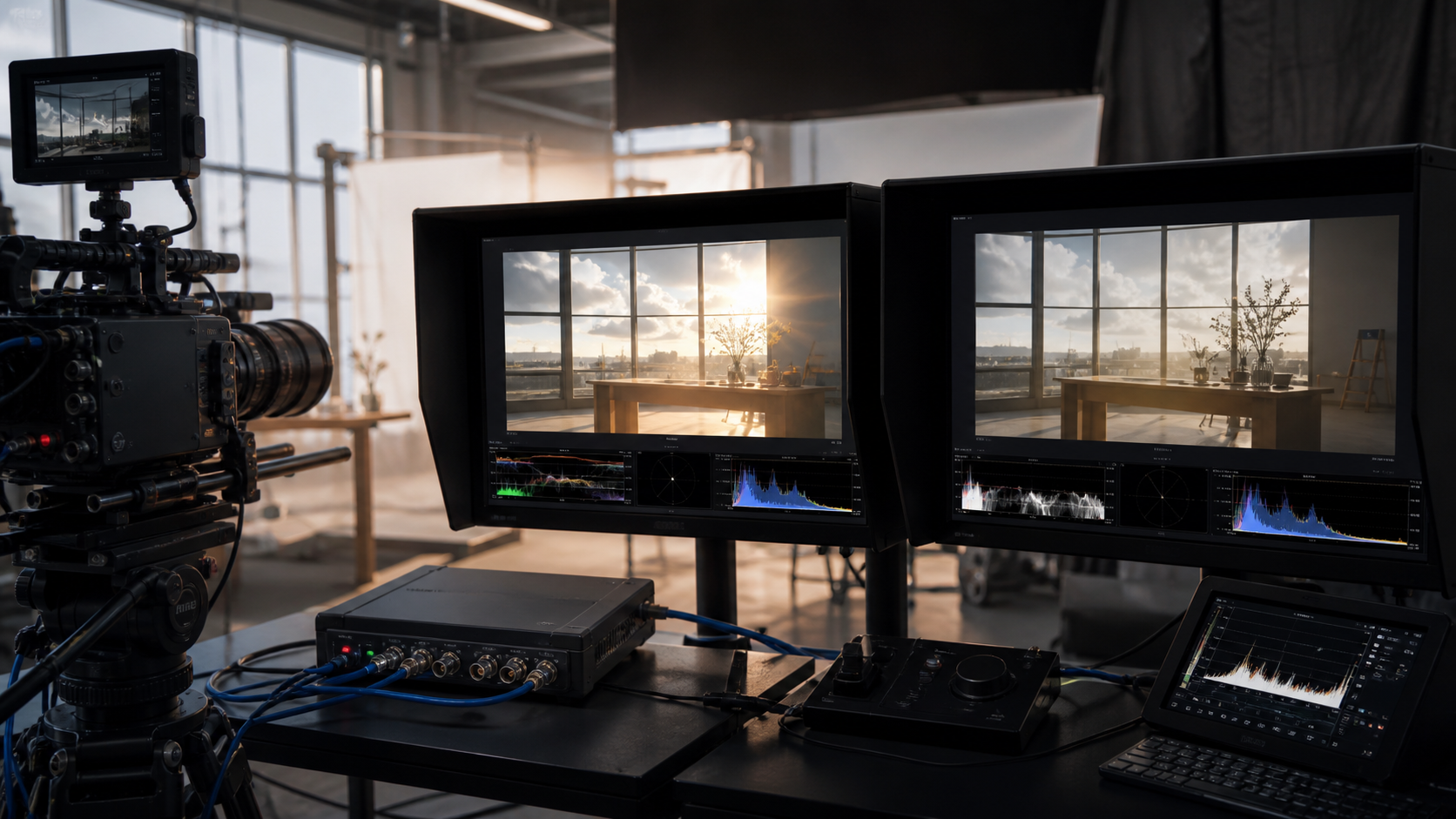
- Define the signal path from Camera Log through HDR/SDR monitoring
- Recommend an optimal setup for LUT boxes, monitor LUTs, and signal distribution
- Provide alternative workflow options when Camera Log output is not available
Based on the on-set equipment and operating requirements, we compare approaches such as generating HDR and SDR separately from the Camera Log signal or deriving SDR from the HDR signal. We then select a configuration that balances image quality with practical operation.
Matching Color and Exposure Across Multiple Cameras
CMT: Camera Matching Transform
When different camera models or individual camera bodies are used together, differences in color and exposure can remain visible through editorial, VFX, and grading—even when the same subject is photographed under the same conditions. We analyze color charts captured by each camera and create a Camera Matching Transform that compensates for those differences.
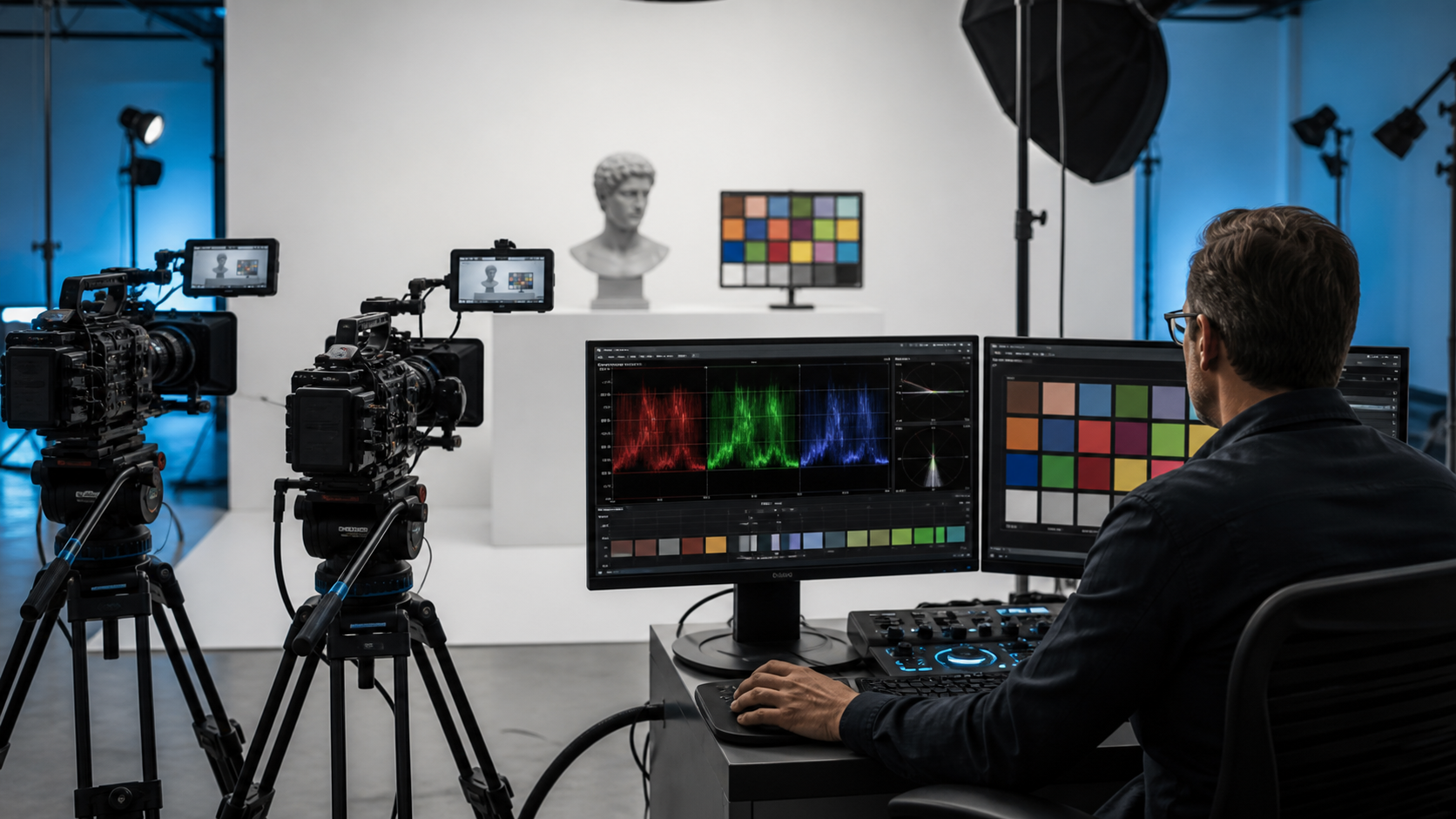
- Measure differences in exposure, color, and tonal response across multiple cameras
- Create a matching transform that can be incorporated into the on-set Viewing LUT
- Apply a consistent approach across dailies, editorial proxies, VFX, and grading
Establishing a reliable camera-matching baseline during testing reduces the need to compensate for camera differences during production and minimizes corrective work in post-production.
ICVFX Color Management
ICVFX involves many elements that require carefully designed and implemented color management—including LED wall calibration, preparation and on-set grading of LED content, camera output, and the color pipeline for on-set monitoring.
A properly managed color pipeline helps prevent missing or duplicated transforms, ensuring that the intended color is maintained throughout the workflow and captured with consistent, high-quality results.

- Background content preparation: Design the color pipeline from source content through final display on the LED wall
- LED wall setup: Configure the target color space, calibrate the LED wall, and perform validation measurements
- Camera monitoring: Design SDR and HDR monitoring pipelines, including the appropriate LUT-based transforms for camera output
- Camera-through calibration: Match the color of the original background content with the color captured and processed through the camera
We also help establish practical guidelines across shooting, VFX, and post-production, ensuring that all teams share the same color standards and workflow expectations from pre-production onward.
Color Management Workshop
A solid understanding of color management is essential for modern content production. However, with limited access to practical learning resources, many professionals have had few opportunities to study it in a structured and hands-on way.
At PixCal Solutions, we offer customized color management workshops tailored to your team’s experience level, production environment, and specific needs.

- What is Color?
- Basics of Color Space
- About Color Pipeline
- About ACES
In addition to the topics above, we can also offer more advanced, hands-on sessions covering LUTs, CLF, AMF, DCTL, OCIO, and other technologies used in modern color-managed workflows.
Designing the Right Workflow for Your Set
The right setup depends on your cameras, monitors, delivery requirements, and production scale. We support each stage of your project—from equipment planning and camera tests to on-set implementation and workflow guidelines.